Coronet or feathers: naming the type
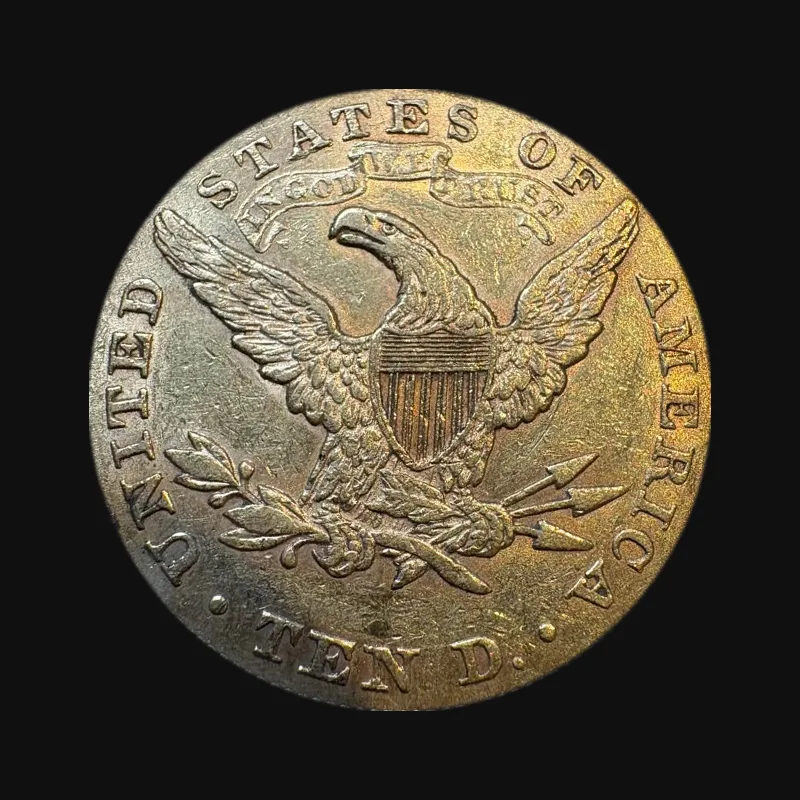
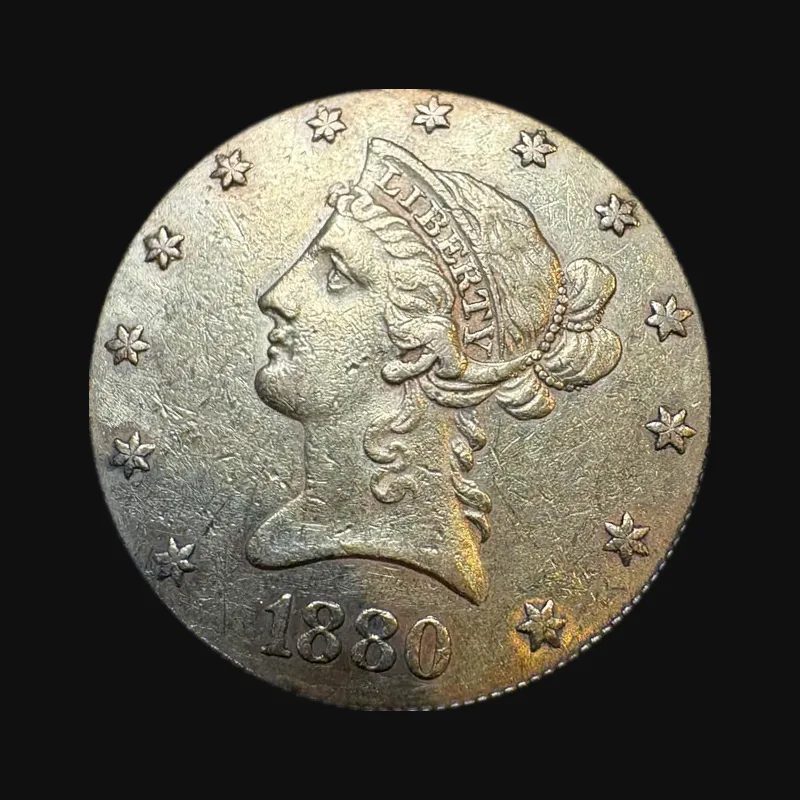
Liberty's headwear settles it in a second: a coronet and a bun for Gobrecht, a feathered headdress for Saint-Gaudens. The eagle on the reverse changes stance too. Gobrecht's bird holds arrows and a branch in its claws; Saint-Gaudens's perches on a bundle of arrows.
Next, turn the coin onto its edge. Reeding points to the Coronet type, raised stars to the Indian Head, 46 before 1912 and 48 after.
The motto gives one last clue to the date. It is absent from Coronets made before 1866, the year it moved onto a scroll above the bird. Saint-Gaudens had dropped it from his design; after an outcry, Congress required it again in May 1908. Every 1907 coin and the first ones of 1908 lack it.
Gold copies: warning signs
Both types have been counterfeited. Cases published by NGC include a Coronet dated 1899 and an Indian Head dated 1912, each made of gold and matching the correct weight, so putting the coin on scales proves nothing. The details do the talking. Mushy relief, tiny lumps in the fields, spikes along the rim denticles or tool marks left from retouching the dies give the copy away.
First of all, a handful of checks weed out the crudest fakes:
- Scales reading to 0.01 g: expect around 16.7 g, slightly less for a heavily circulated piece.
- Caliper: the diameter should be close to 27 mm.
- Magnet: gold ignores it, and any pull betrays a fake.
- Ring: held on a fingertip and gently tapped, a solid gold coin sings for a while; a dead sound calls for caution but is not proof.
- Anachronisms: a motto on a pre-1866 Coronet, a CC mark after 1893, a D mark before 1906, a reeded edge on an Indian Head: any one of these is enough to reject the coin.
The full approach is set out in our guide how to spot a fake coin.
Reading wear under a loupe
Coronets wear first at the top of the coronet and in the hair just above the eye, then on the locks that rise above the coronet. On the eagle side, the neck and the ends of the wings flatten first.
On an Indian Head, start with the highest points, the headdress feathers and the cheekbone, before moving to the eagle. A ten-power loupe makes the check far more reliable.
Many of these coins were worn as pendants or polished. Leftover solder, an edge reworked with a file, an unnaturally even gleam: the loupe shows them up. Leave the coin as it is, do not rub it, and see grades of preservation for the grading scale.
$5, $10 or $20: let the measurements decide
In the same years, the $5 half eagle and the $20 double eagle carry designs very close to the eagle's. Weight and diameter remove any doubt:
- $5: 8.359 g for 21.6 mm;
- $10: 16.718 g for roughly 27 mm;
- $20: roughly 33.44 g for 34 mm.
The reverse also states the value, spelt out on the Indian Head (“TEN DOLLARS”), abbreviated on the Coronet (“TEN D.”). More coins from abroad are listed on the foreign coins page.